Definition: Appendicitis (uh-PEN-duh-SY-tis) is the reddening, irritation (inflammation), and pain in the appendix caused by infection, scarring, or blockage(1).
Quick Background:
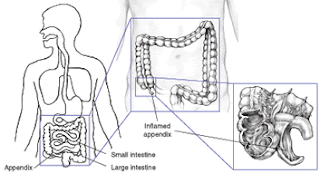
The appendix is a small, tube-like structure attached to the cecum (first part of the large intestine). The appendix is located in the lower right portion of the abdomen. It has no known function. Removal of the appendix appears to cause no change in digestive function.
Description:
Appendicitis is an inflammation of the appendix. Once it starts, there is no effective medical therapy, so appendicitis is considered a medical emergency. When treated promptly, most patients recover without difficulty. If treatment is delayed, the appendix can burst, causing infection and even death. Appendicitis is the most common acute surgical emergency of the abdomen. It occurs most often between the ages of 10 and 30 but it anyone can get appendicitis (2).
Causes:
The cause of appendicitis relates to blockage of the inside of the appendix, known as the lumen. The blockage leads to increased pressure, impaired blood flow, and inflammation. If the blockage is not treated, gangrene and rupture (breaking or tearing) of the appendix can result.
Most commonly, feces blocks the inside of the appendix. Also, bacterial or viral infections in the digestive tract can lead to swelling of lymph nodes, which squeeze the appendix and cause obstruction. This swelling of lymph nodes is known as lymphoid hyperplasia.
In some people, the condition may be caused by an injury to the abdomen. Genetics may be a factor in others. For example, appendicitis that runs in families may result from a genetic variant that predisposes a person to obstruction of the appendiceal lumen(3).
Symptoms:
Symptoms of this digestive disorder may include:
- pain in the abdomen, first around the belly button, then moving to the lower right area
- loss of appetite
- nausea
- vomiting
- constipation or diarrhea
- inability to pass gas
- low fever that begins after other symptoms
- abdominal swelling
Not everyone with appendicitis has all the symptoms. The pain intensifies and worsens when moving, taking deep breaths, coughing, or sneezing. The area becomes very tender. People may have a sensation called "downward urge," also known as "tenesmus," which is the feeling that a bowel movement will relieve their discomfort.
Laxatives and pain medications should not be taken in this situation. Anyone with these symptoms needs to see a qualified physician immediately(4).
Diagnosis:
Medical History and Physical Examination
Asking questions to learn the history of symptoms and a careful physical examination are key in the diagnosis of appendicitis. The doctor may ask questions relating to the nature, timing, location, pattern, and severity of pain and symptoms. Any previous medical conditions and surgeries, family history, medications, and allergies are important information to the doctor. Use of alcohol, tobacco, and any other drugs should also be mentioned. This information is considered confidential and cannot be shared without the permission of the patient.
Before beginning a physical examination, a nurse or doctor will usually measure vital signs: temperature, pulse rate, breathing rate, and blood pressure. Usually the physical examination proceeds from head to toe. Many conditions such as pneumonia or heart disease can cause abdominal pain. Generalized symptoms such as fever, rash, or swelling of the lymph nodes may point to diseases that wouldn't require surgery.
Examination of the abdomen helps narrow the diagnosis. Location of the pain and tenderness is important. Pain is a symptom described by a patient; tenderness is the response to being touched.
Two signs, called peritoneal signs, suggest that the lining of the abdomen is inflamed and surgery may be needed: rebound tenderness and guarding. Rebound tenderness is when the doctor presses on a part of the abdomen and the patient feels more tenderness when the pressure is released than when it is applied.
Guarding, on the other hand, refers to the tensing of muscles in response to touch. The doctor may also move the patient's legs to test for pain on flexion of the hip (psoas sign), pain on internal rotation of the hip (obturator sign), or pain on the right side when pressing on the left (Rovsing's sign). These are valuable indicators of inflammation but not all patients have them(5).
Laboratory Tests
Blood tests are used to check for signs of infection, such as a high white blood cell count. Blood chemistries may also show dehydration or fluid and electrolyte disorders. Urinalysis is used to rule out a urinary tract infection. Doctors may also order a pregnancy test for women of childbearing age (those who have regular periods).
Imaging Tests
X rays, ultrasound, and computed tomography (CT) scans can produce images of the abdomen. Plain x rays can show signs of obstruction, perforation (a hole), foreign bodies, and in rare cases, an appendicolith, which is hardened stool in the appendix. Ultrasound may show appendiceal inflammation and can diagnose gall bladder disease and pregnancy.
By far the most common test used, however, is the CT scan. This test provides a series of cross-sectional images of the body and can identify many abdominal conditions and facilitate diagnosis when the clinical impression is in doubt. All women of childbearing age should have a pregnancy test before undergoing any testing with x rays.
In selected cases, particularly in women when the cause of the symptoms may be either the appendix or an inflamed ovary or fallopian tube, laparoscopy may be necessary. This procedure avoids radiation, but requires general anesthesia. A laparoscope is a thin tube with a camera attached that is inserted into the body through a small cut, allowing doctors to see the internal organs. Surgery can then be performed laparoscopically if the condition present requires it(6).
TreatmentSurgery
Acute appendicitis is treated by surgery to remove the appendix. The operation may be performed through a standard small incision in the right lower part of the abdomen, or it may be performed using a laparoscope, which requires three to four smaller incisions. If other conditions are suspected in addition to appendicitis, they may be identified using laparoscopy.
In some patients, laparoscopy is preferable to open surgery because the incision is smaller, recovery time is quicker, and less pain medication is required. The appendix is almost always removed, even if it is found to be normal. With complete removal, any later episodes of pain will not be attributed to appendicitis.
Recovery from appendectomy takes a few weeks. Doctors usually prescribe pain medication and ask patients to limit physical activity. Recovery from laparoscopic appendectomy is generally faster, but limiting strenuous activity may still be necessary for 4 to 6 weeks after surgery. Most people treated for appendicitis recover excellently and rarely need to make any changes in their diet, exercise, or lifestyle(7).
Antibiotics and Other Treatments
If the diagnosis is uncertain, people may be watched and sometimes treated with antibiotics.
This approach is taken when the doctor suspects that the patient's symptoms may have a nonsurgical or medically treatable cause. If the cause of the pain is infectious, symptoms resolve with intravenous antibiotics and intravenous fluids. In general, however, appendicitis cannot be treated with antibiotics alone and will require surgery.
Occasionally the body is able to control an appendiceal perforation by forming an abscess. An abscess occurs when an infection is walled off in one part of the body. The doctor may choose to drain the abscess and leave the drain in the abscess cavity for several weeks. An appendectomy may be scheduled after the abscess is drained(8).
Complications
The most serious complication of appendicitis is rupture. The appendix bursts or tears if appendicitis is not diagnosed quickly and goes untreated. Infants, young children, and older adults are at highest risk. A ruptured appendix can lead to peritonitis and abscess. Peritonitis is a dangerous infection that happens when bacteria and other contents of the torn appendix leak into the abdomen. In people with appendicitis, an abscess usually takes the form of a swollen mass filled with fluid and bacteria. In a few patients, complications of appendicitis can lead to organ failure and death(9).
Sources:
1. Digestive Diseases Dictionary A-D. National Digestive Diseases Information Clearinghouse. National Institutes of Health. NIH Publication No. 00–2750. Februrary 2000
2. Appendicitis. National Digestive Diseases Information Clearinghouse. National Institutes of Health. NIH Publication No. 04–4547 - June 2004
3 – 9. Ibid.
10. Image Credit: NIDDK Image Library. National Institutes of Health
Page Last Revised: May 21, 2010


